Vapor-Quality Sensor
Developed in-house, SynthCool's vapor-quality sensor monitors refrigerant vapor quality and enables precise control through advanced algorithms, maintaining optimal two-phase flow conditions as chip loads fluctuate.

Unlike single-phase cooling, two-phase cooling leverages latent heat during phase change (from liquid to vapor) to remove more heat with less coolant flow. This enables efficient cooling of high heat flux devices while reducing pumping power.
Coolant absorbs heat from high-power computing components.
As the coolant reaches its boiling point, it changes from liquid to vapor and absorbs latent heat.
The vapor carries the absorbed heat away from the heat source toward the heat rejection side.
The vapor releases heat, condenses back into liquid, and returns to the cooling cycle.
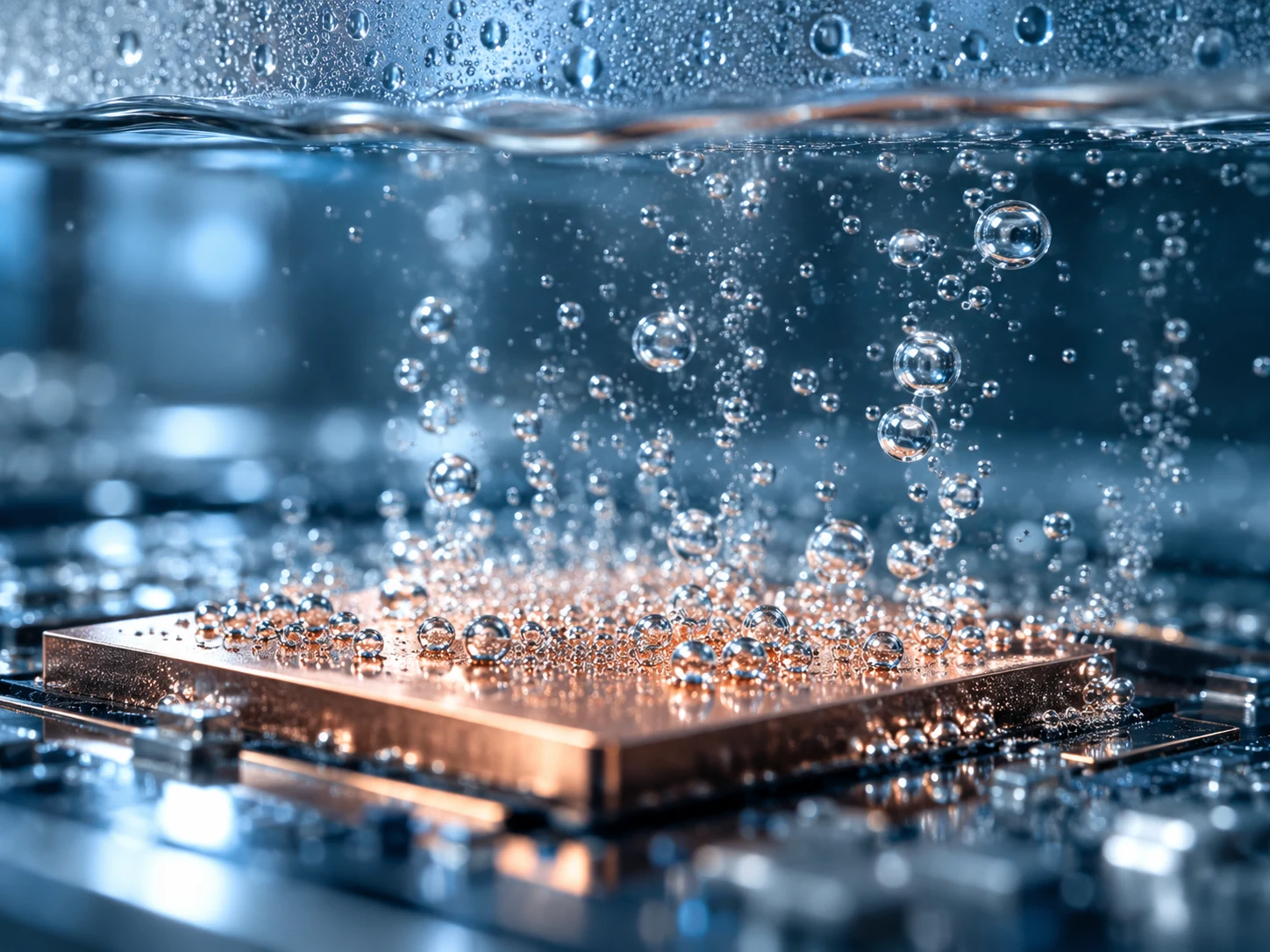
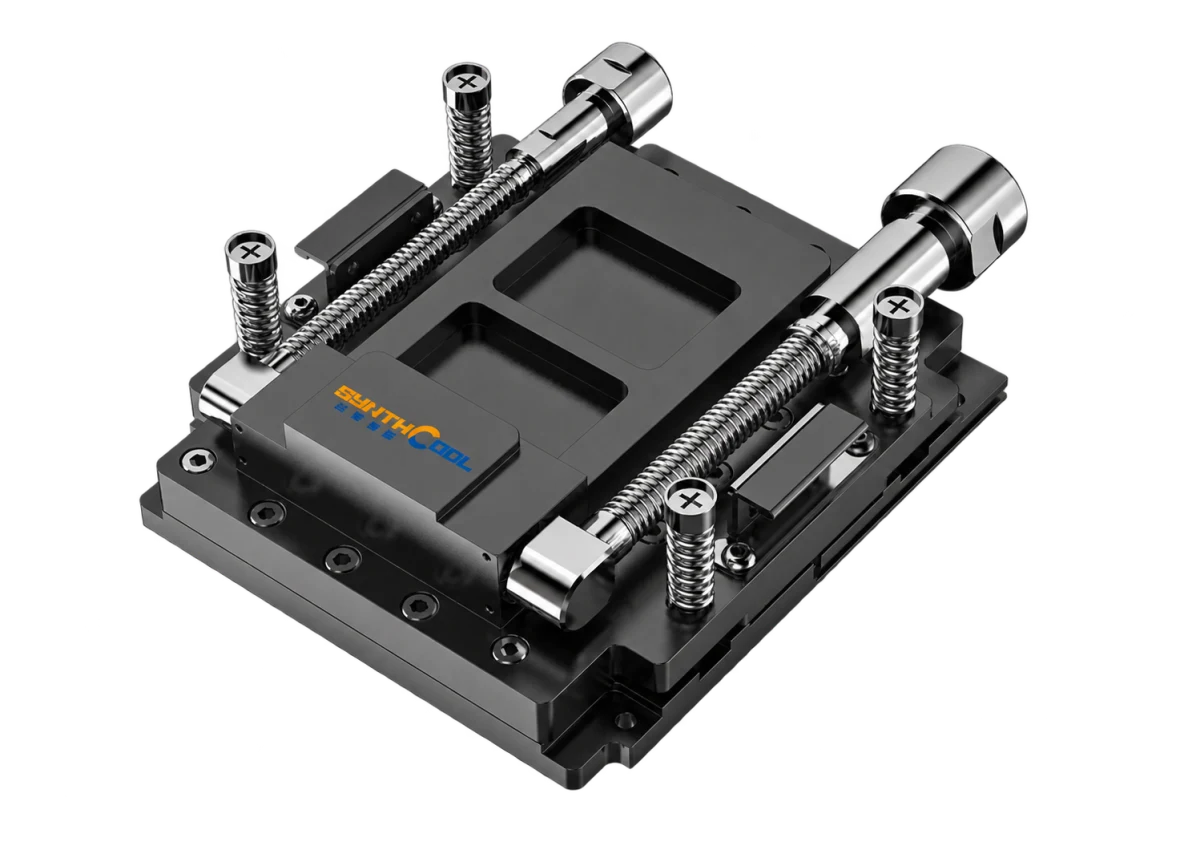
Built on the superior heat transfer characteristics of phase change, SynthCool develops proprietary thermodynamic cycles and high-performance cold plates for efficient chip-level cooling. Our integrated portfolio covers two-phase QDs, manifolds, and cold plates, delivering high-performance cooling with just 1/3 the flow rate of conventional water-cooled cold plates.
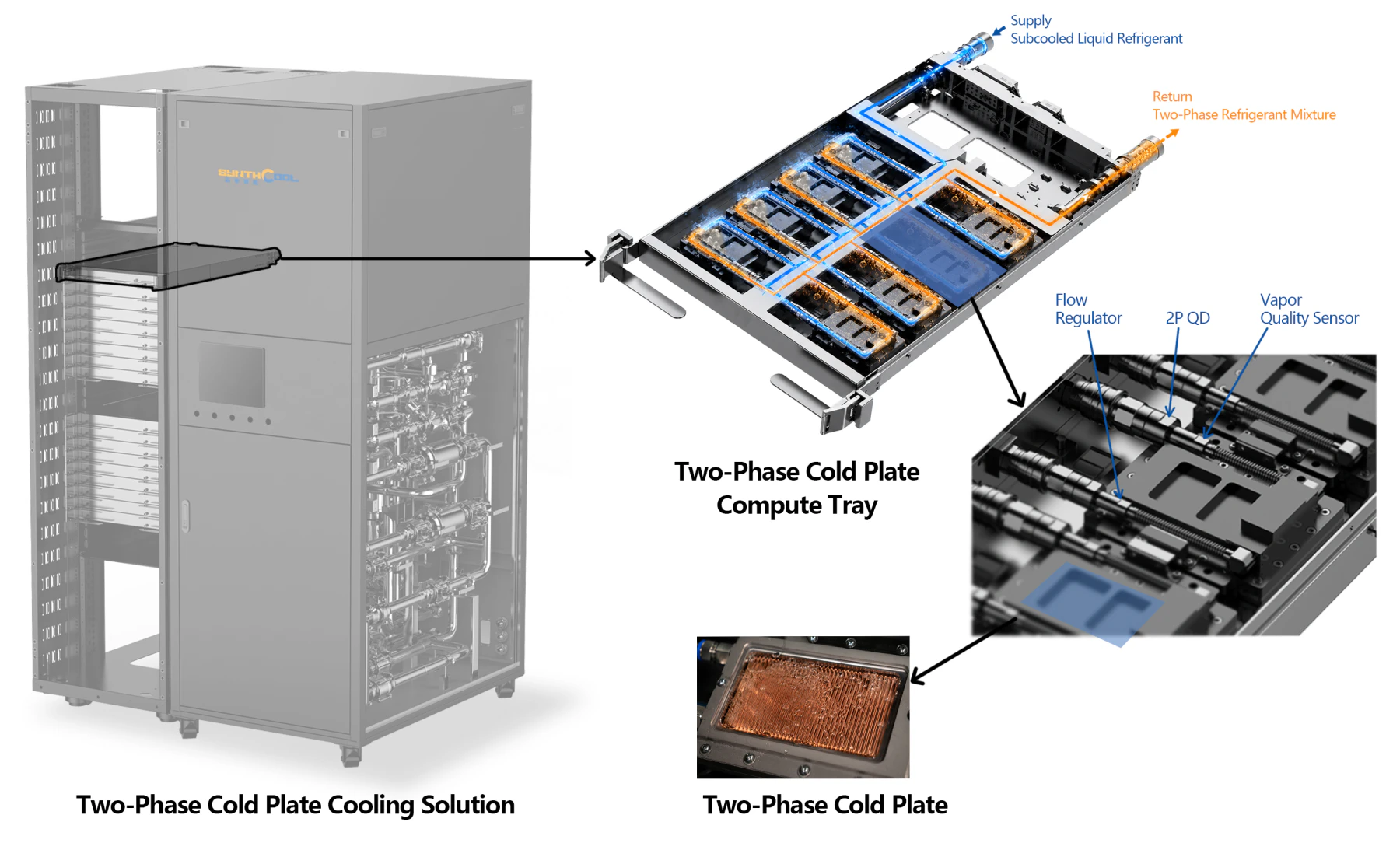
Developed in-house, SynthCool's vapor-quality sensor monitors refrigerant vapor quality and enables precise control through advanced algorithms, maintaining optimal two-phase flow conditions as chip loads fluctuate.
SynthCool's self-developed flow regulator dynamically adjusts refrigerant flow rates through advanced control algorithms, coordinating liquid and vapor flow to adapt boiling and condensation heat transfer to changing thermal loads.
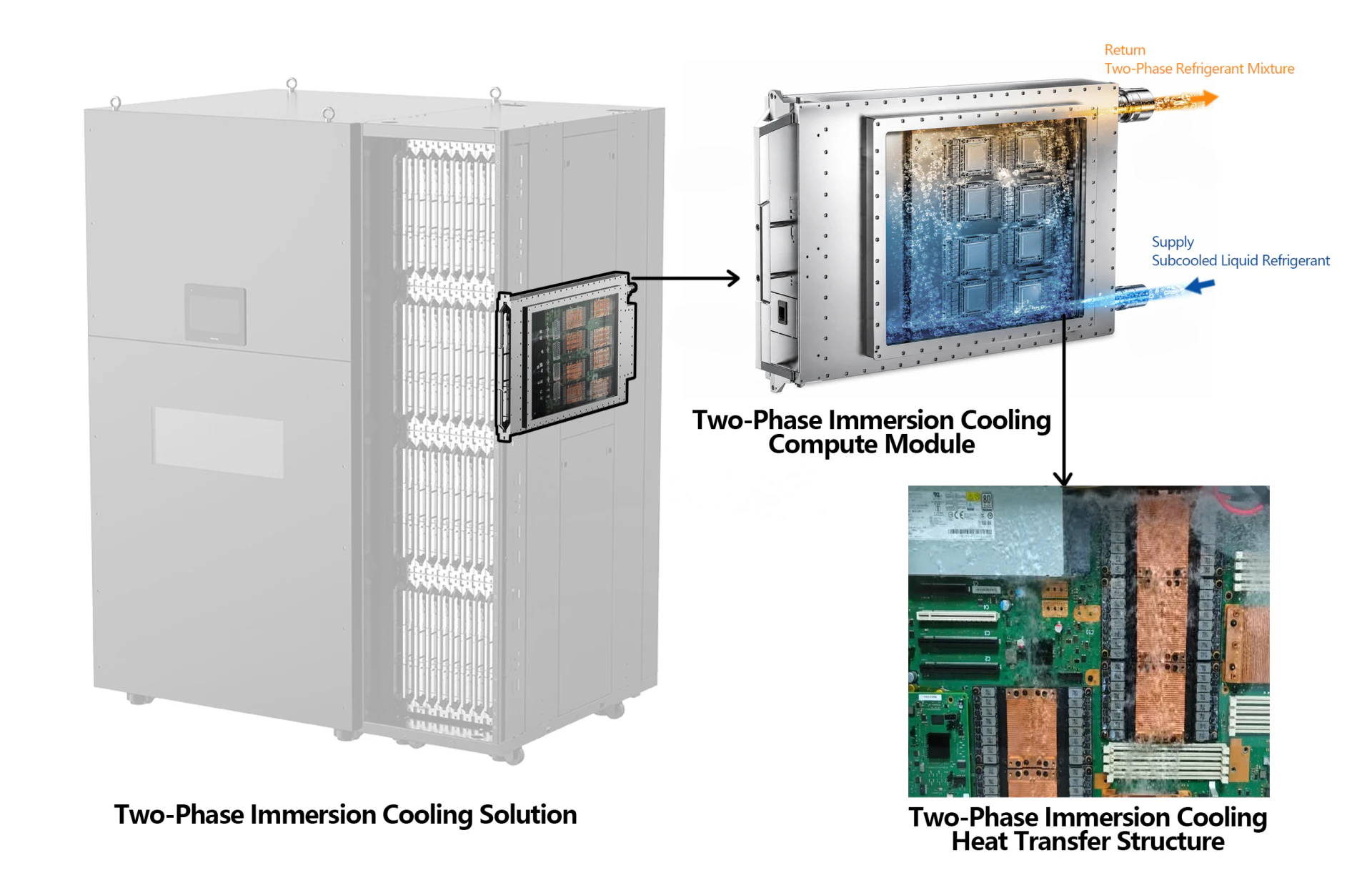
SynthCool's two-phase immersion cooling solution integrates immersion compute modules and proprietary heat transfer structures for efficient, high-density thermal management. Subcooled liquid refrigerant is supplied to the compute module, where it absorbs heat through phase change. The resulting two-phase refrigerant mixture is then returned for heat rejection and recirculation, enabling 100% liquid cooling coverage and stable operation at ultra-high rack densities.
AI is driving computing density to new heights, creating unprecedented thermal challenges for data centers. The next generation of AI infrastructure demands more efficient, flexible, and scalable cooling systems.
The coolant remains in a liquid state throughout the cooling loop, absorbing heat through sensible heat transfer. As heat loads increase, higher flow rates and larger heat exchangers may be required to maintain thermal performance.
The refrigerant undergoes a liquid-to-vapor phase change at the heat source, using latent heat to absorb large amounts of heat. This enables high heat removal with lower coolant flow and supports higher heat flux with reduced pumping requirements.
Two-phase cooling can be implemented in two ways depending on computing architecture, thermal requirements, and system design.
Liquid refrigerant is delivered directly to high-heat components through specialized cold plates mounted on CPUs and GPUs, removing heat at the source.
 Direct-to-chip cooling
Servers or chips are immersed in a dielectric refrigerant, allowing heat to be transferred directly from the chips to the surrounding fluid.
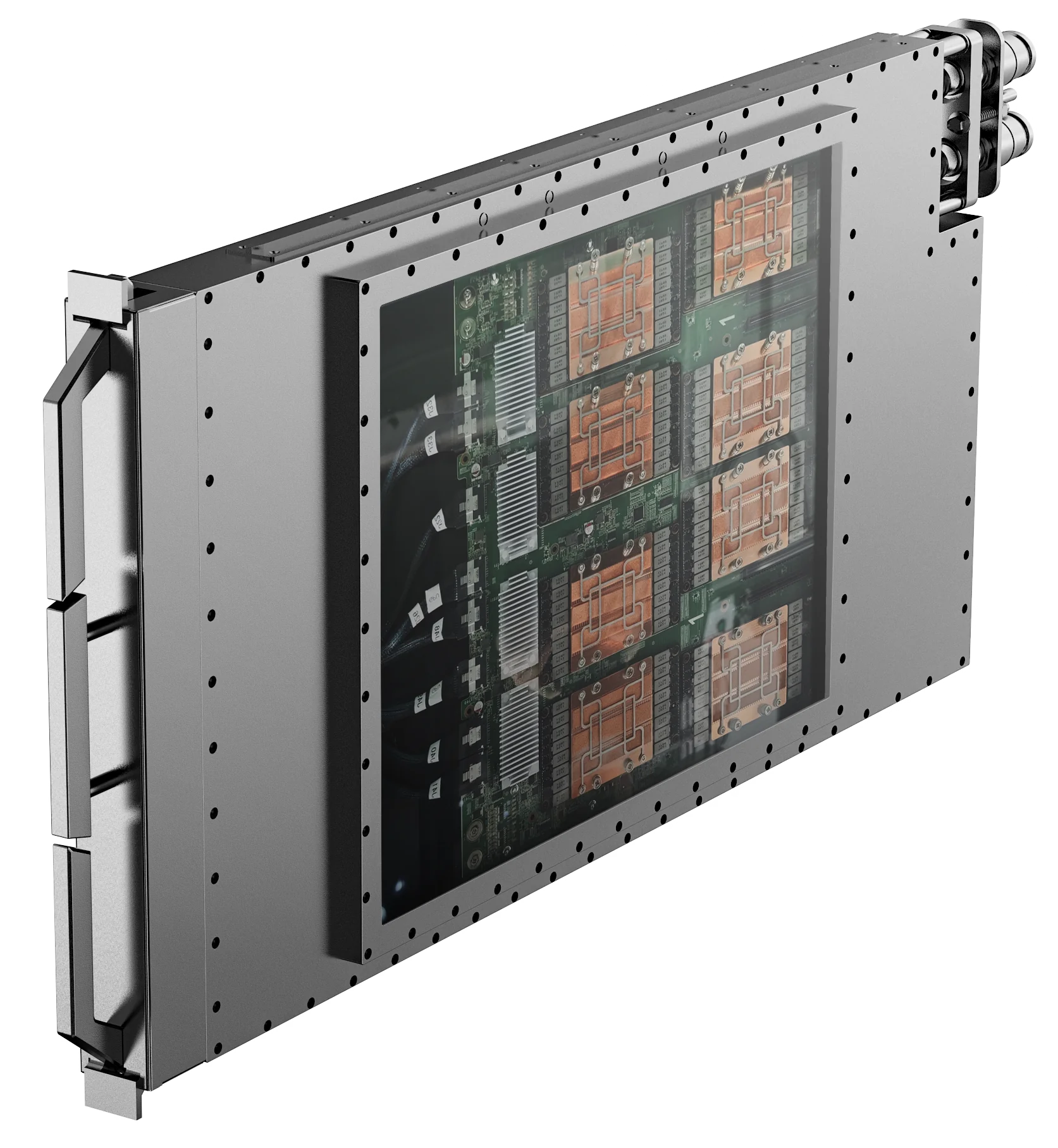 Immersion cooling
Built for current and next-gen high power consumption GPU and CPU.
Phase-change boiling heat transfer targets chip-level hotspots.
Reduces data center footprint for large-scale AI clusters.
Enables free cooling with ambient-temperature cooling sources to cut costs.
SynthCool’s Landau 2PCP series two-phase liquid cooling solution combines two-phase cold plates, a dedicated two-phase RDU, and manifolds into an integrated cooling system, supported by optimized system controls. By leveraging the latent heat absorbed as the refrigerant boils inside the cold plates, the solution efficiently removes heat from chips while supporting high heat flux and uniform temperatures across multiple nodes.
Learn more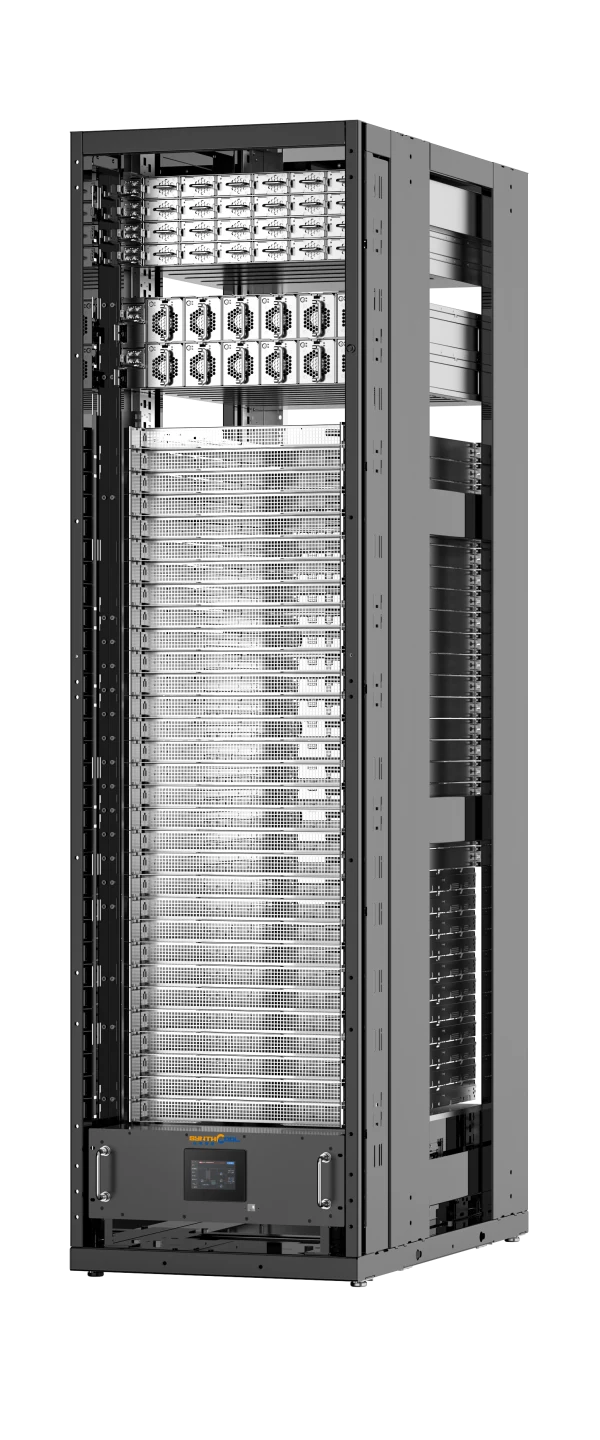
The SynthCool Landau 2PIC two-phase immersion cooling solution adopts a low-boiling-point dielectric fluid to fully immerse server electronic components, achieving 100% liquid cooling coverage. The refrigerant directly contacts heat-generating components and absorbs heat through boiling (phase change), ensuring stable, uniform cooling for ultra high-density servers.
Learn more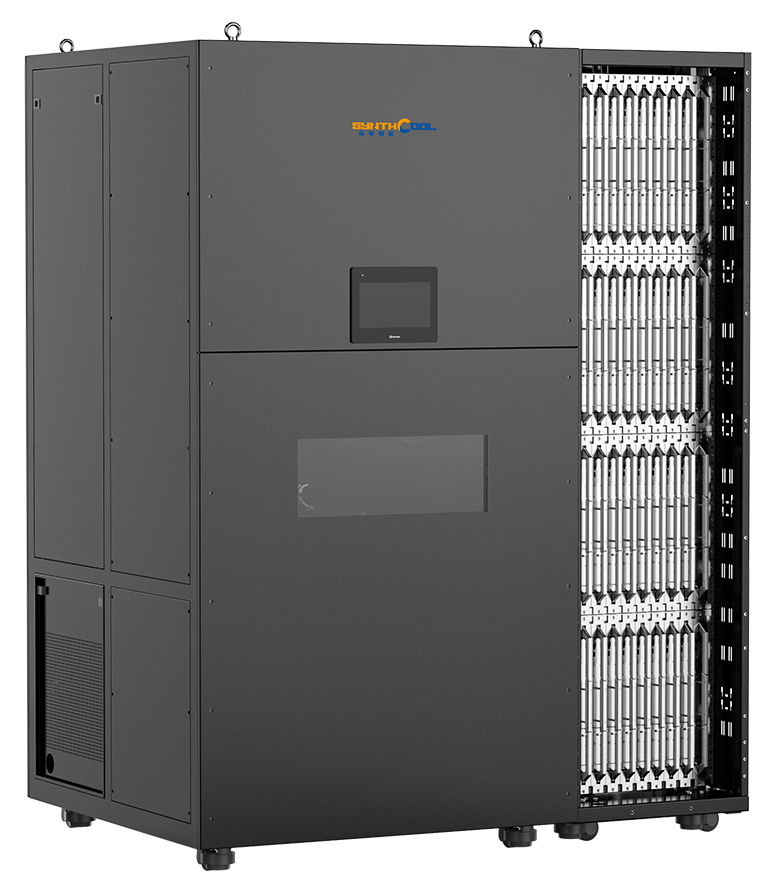
Talk to our experts about your thermal challenges and cooling requirements.